
Distance should never be the reason a patient misses a life-saving appointment. For many patients living in rural communities, the road to recovery is literally too long to travel. Healthcare access isn't a luxury; it is a fundamental necessity. Yet, for millions of Americans outside major metropolitan hubs, getting to a specialist or a routine check-up is the single most difficult barrier to staying healthy.
At Swift Ryde, we see this struggle every day. We know that a "no-show" isn't just a missed slot on a doctor’s calendar. It is a missed opportunity for treatment, a delay in diagnosis, and a step backward for a patient’s well-being. Solving the problem of no-show medical rides in rural areas isn't just about putting cars on the road: it’s about building a bridge of reliability between the patient’s front door and the clinic.
The Rural Reality: Why "Just Drive There" Doesn't Work
For many patients, the logistics of a medical appointment are more stressful than the medical procedure itself. In rural areas, the challenges are amplified by geography and a lack of infrastructure. Research shows that patients living more than 20 miles from a clinic have significantly higher no-show rates. When you live that far out, a simple car breakdown or a sudden change in weather doesn't just mean you're late: it means you aren't coming at all.
Even more surprising is that patients living very close to clinics (less than 5 miles) in rural settings also face high no-show rates. Why? Because "close" is relative when you don't have a car, public transit is non-existent, and the sidewalk ends a mile before the hospital. For these patients, the transportation gap is a chasm that stops them from receiving the care they deserve.
The financial burden of travel is another wall. Fuel costs, vehicle maintenance, and the time taken off work by family members to drive a loved one can make a "free" check-up feel incredibly expensive. When the cost of getting there outweighs the perceived immediate need for the visit, many patients simply stay home. This is where the cycle of declining health begins.

The High Cost of the "No-Show"
A no-show medical ride has a ripple effect that touches everyone. For the patient, it means chronic conditions go unmanaged. For the healthcare provider, it means wasted resources and disrupted schedules. For the community, it leads to higher emergency room utilization because small problems that could have been handled at a clinic visit turn into crises that require an ambulance.
Reliable Non-Emergency Medical Transportation (NEMT) is the missing link. Statistics show that robust NEMT programs can decrease missed appointments by as much as 30%. That’s not just a number; that’s thousands of people getting their dialysis, finishing their chemotherapy, or managing their diabetes before it becomes an emergency. We believe that transportation should be the most invisible part of healthcare. You should be able to take it for granted.
Solving the No-Show Crisis: The Swift Ryde Strategy
Solving this problem requires more than a GPS and a fuel card. It requires a dedicated system designed specifically for the needs of rural healthcare. Here is how we finally close the gap.
1. Specialization Over Generalization
Rideshare apps are great for getting to a restaurant, but they aren't built for medical needs. A rural medical ride often requires more than just a seat; it requires a wheelchair-accessible vehicle, room for a caregiver, and a driver who understands the sensitivity of a patient’s condition. At Swift Ryde, we don't just provide a ride; we provide a clinical support extension.
2. Door-to-Door, Not Curb-to-Curb
In rural areas, the "curb" might be a long, gravel driveway or a porch with three steps that a patient with limited mobility can't navigate alone. A standard "curb-to-curb" service fails these patients. We emphasize door-to-door service, ensuring the patient is safely assisted from their home into the vehicle and then directly into the clinic lobby. This level of care removes the physical anxiety of the trip.
3. Advanced Scheduling and Recurring Bookings
For many patients, healthcare is a marathon, not a sprint. Conditions like kidney failure require recurring dialysis appointments three times a week. Trying to book these one by one is a recipe for a missed ride. We advocate for recurring bookings that create a consistent, predictable schedule. When the ride is a fixed part of the week, the "no-show" risk virtually disappears.

4. Real-Time Coordination and Communication
One of the biggest drivers of no-shows is uncertainty. "Is the driver coming? Did I give the right address? What if I’m not ready?" Swift Ryde utilizes technology to bridge this communication gap. From SMS confirmations to real-time tracking, we keep both the patient and their caregiver in the loop. This transparency builds the trust necessary for a patient to commit to their appointment. You can learn more about our commitment to communication in our SMS terms of service.
The Power of Strategic Partnerships
No transportation company can solve rural healthcare access alone. It takes a village: or in this case, a network of healthcare providers, insurers, and transportation experts.
For many patients, the coordination should happen behind the scenes. Healthcare facilities should have direct lines to transportation providers to ensure that if an appointment is moved, the ride is moved with it. We work closely with B2B partners to integrate our scheduling systems with clinic workflows. This reduces the administrative burden on the patient and ensures that the ride is as much a part of the treatment plan as the medication.
A Note to Caregivers: You Don’t Have to Do This Alone
If you are a caregiver in a rural area, you know the "transportation tax." You spend hours every week driving, waiting in parking lots, and stressing over whether your car is reliable enough for the next trip to the city.
It is okay to ask for help. Using a professional NEMT service like Swift Ryde isn't just about the ride; it’s about giving you your time back and giving your loved one a professional level of care. We offer rider support to help you navigate the booking process and ensure your loved one's specific needs are met every single time.
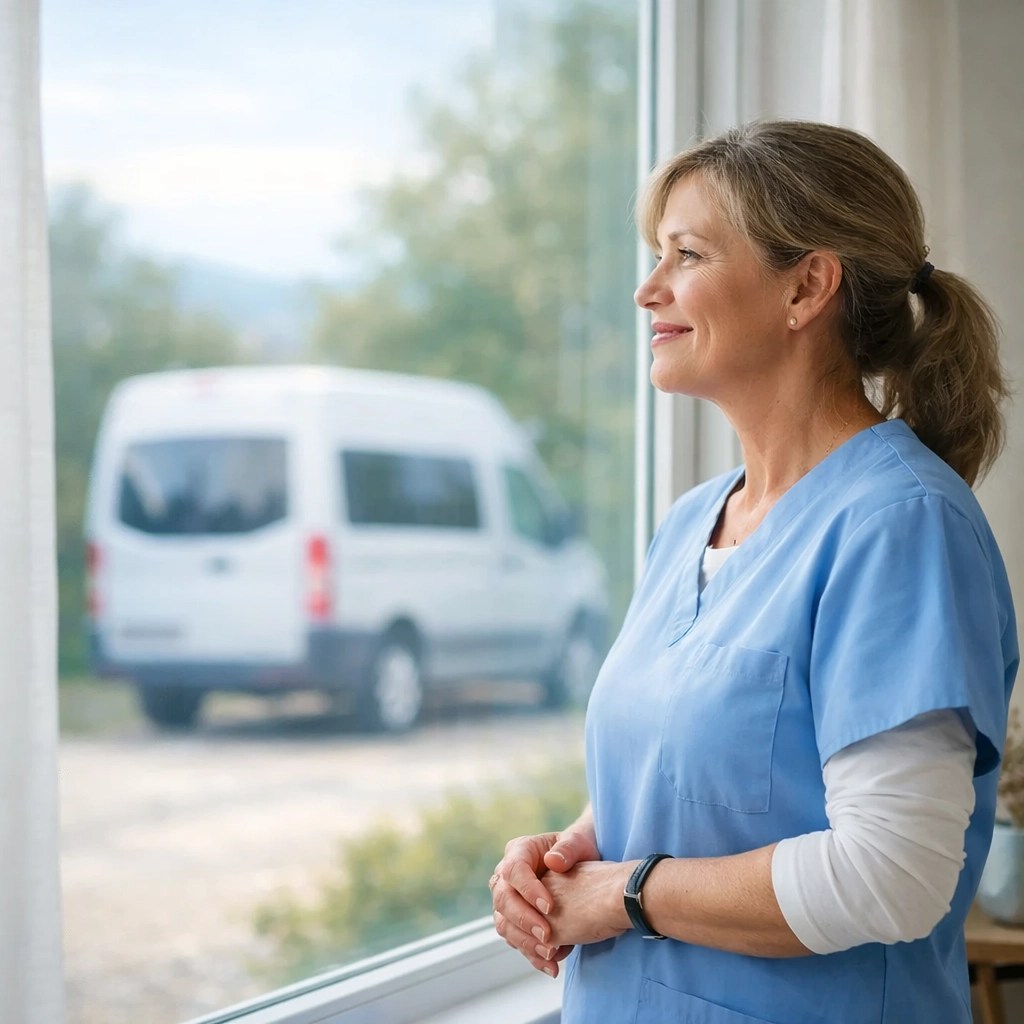
Transportation is Healthcare
We need to stop viewing transportation as a "side issue" in the medical world. If a patient can't get to the clinic, the best doctor in the world can't help them. In rural America, transportation is healthcare.
By focusing on reliability, specialized equipment, and human-centered service, we can end the no-show crisis. We can ensure that a zip code doesn't determine a person's lifespan. At Swift Ryde, we are committed to being the reliable partner that rural patients can count on, one mile at a time.
If you or a loved one are struggling with getting to medical appointments, don't wait for a "no-show" to happen. Explore our services or contact us today to see how we can build a transportation plan that works for you. Reliable care is just a ride away.
This post is part of our 7-day series on NEMT reliability and healthcare access. Check back tomorrow for "5 Steps to Prepare for a Wheelchair-Accessible Ride," where we’ll dive deep into making your next trip as smooth as possible.