
Living in a rural community should never be a trade-off for your health. For many patients, the distance between their front door and the nearest specialist isn't just a long drive; it is the single most difficult barrier to staying healthy. When you live miles away from the city center, a simple check-up becomes a logistical marathon.
In remote areas, transportation isn't a comfort. It is a fundamental necessity. Yet, for thousands of families, the "transportation gap" is a daily reality that leads to missed appointments, worsening conditions, and unnecessary emergency room visits.
At Swift Ryde, we believe that your zip code should not determine your life expectancy. Getting a reliable ride in a remote area shouldn't feel like a miracle. It should be a standard part of your healthcare plan.
The Geographic Tax on Rural Health
For many patients, living in the country means paying a "geographic tax." This tax isn't paid in money: it’s paid in time, stress, and physical health. When the nearest dialysis center or oncologist is 50 miles away, the "just ask a neighbor" strategy eventually fails. Neighbors have jobs. Families have commitments. Vehicles break down.
The reality of rural healthcare access is often invisible to those living in urban centers. In a city, if a bus is late, you catch the next one. In a rural town, if your ride falls through, you don't go to the doctor. Period. This lack of infrastructure creates a cycle of crisis. Patients wait until a minor issue becomes a major emergency because the effort to get to a routine appointment is too high.

Why Standard Rideshares Aren't the Answer
It’s a common misconception that apps like Uber or Lyft have "solved" transportation. For rural patients, these services are often non-existent or dangerously unreliable.
Standard rideshare drivers are freelancers. They go where the profit is. In remote areas, there aren't enough "pings" to keep a driver in the area. If you manage to find a driver to take you to the hospital, there is no guarantee a driver will be available to take you home.
Furthermore, standard rideshare vehicles are not equipped for medical needs. For many patients, a standard sedan is a barrier in itself. If you use a wheelchair, a walker, or have limited mobility, squeezing into the back of a compact car isn't just uncomfortable: it's potentially unsafe.
This is where NEMT (Non-Emergency Medical Transportation) changes the game. Unlike a gig-worker with an app, NEMT is a professional service designed specifically for the healthcare journey.
The NEMT Advantage: More Than Just a Ride
Reliability in remote areas requires more than just a car and a map. It requires a system.
For many patients, the shift to a dedicated medical transport service is a revelation. NEMT providers like Swift Ryde operate on a schedule, not an algorithm. When you book a ride, that slot is yours. The driver isn't looking for a "better fare" elsewhere. They are there for you.
Here is what makes professional medical transport the only real solution for rural areas:
- Specialized Vehicles: Most rural patients requiring assistance need wheelchair-accessible vans or vehicles with low entry points.
- Door-to-Door Service: In the city, "curbside" is fine. In the country, you might need help getting from your living room to the van. A professional driver provides that "extra mile" of care.
- Predictability: You can schedule rides weeks in advance. This is vital for recurring treatments like dialysis or physical therapy.
- Trained Professionals: NEMT drivers understand patient privacy, basic medical sensitivity, and how to handle mobility equipment safely.

Overcoming the Logistics of Distance
The single biggest fear for rural caregivers is the "what if." What if the car doesn't start? What if I can't leave work? What if my parent falls while trying to get into the truck?
Reliable transportation removes the "what if." By moving toward a door-to-door medical ride model, the burden of logistics shifts from the family to the professionals.
For many patients, the coordination of a long-distance medical trip is exhausting. Professional services handle the routing and timing, ensuring that even if there is construction on the main highway or a detour through backroads, the patient arrives on time. In rural areas, "on time" is a moving target that requires local knowledge and professional planning.
The Financial Reality: How to Pay for Rural Rides
One of the biggest hurdles to rural healthcare access is the perceived cost. However, transportation is often covered by insurance programs that patients don't realize they have.
Many Medicaid plans include NEMT benefits specifically because the state knows that paying for a van ride is significantly cheaper than paying for an emergency room visit or a week-long hospital stay caused by a missed appointment. If you are a rural resident, your first step should be checking your policy for medical transportation coverage.
Additionally, for those paying out-of-pocket, the "cost" must be weighed against the alternative. When you factor in gas, vehicle wear and tear, and the lost wages of a family member taking a full day off to drive, professional transport often becomes the most economical choice.

Steps to Secure Your Reliable Ride
If you are struggling to find a ride in a remote area, you don't have to figure it out alone. Follow these steps to build a reliable plan:
- Audit Your Needs: Do you need a sprinter-class vehicle for a wheelchair? Do you need a driver who can assist you into the building?
- Check Your Insurance: Call your provider and ask specifically about "Non-Emergency Medical Transportation" (NEMT) benefits.
- Book in Advance: Rural routes require planning. Don't wait until the day before. The best services allow you to book weeks or even months ahead.
- Consider Recurring Bookings: If you have regular appointments, set them up as a recurring schedule. This ensures you are always on the manifest and never forgotten.
A Fundamental Right to Access
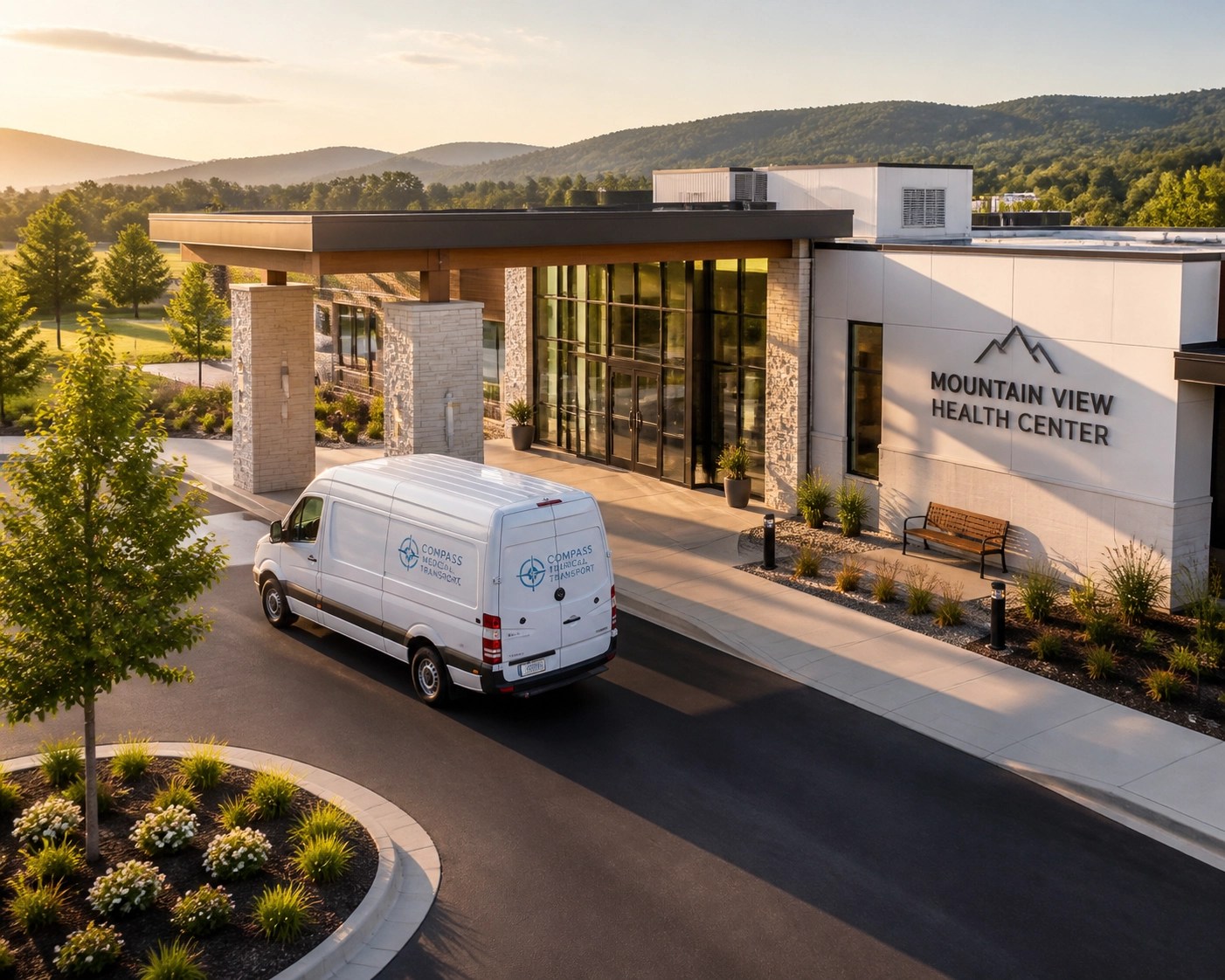
At the end of the day, healthcare is a right, but that right is meaningless without the means to reach it. For many patients, the van that pulls into their gravel driveway is more than just a vehicle; it is a lifeline. It represents independence, health, and the peace of mind that comes with knowing you aren't stranded.
Swift Ryde is committed to being that lifeline. We understand that a 40-mile trip through rural counties isn't "just a commute." It is a vital link in your medical care.
Whether you are a patient looking for a way to your next specialist visit or a caregiver looking to take the weight of logistics off your shoulders, reliable transportation is available. You don't have to move to the city to get the care you deserve. You just need a ride you can count on.
Taking the Next Step
Don't let distance stand in the way of your health. The barriers to rural healthcare are real, but they are not insurmountable. By choosing a professional, reliable NEMT service, you are taking control of your medical journey.
If you are ready to stop worrying about how you’ll get to your next appointment, explore our NEMT services or learn more about booking medical rides by the hour. Your health is worth the trip, and we are here to make sure you get there.