
For many patients, the journey to a medical appointment is more exhausting than the appointment itself. For caregivers, the logistics of a wheelchair-accessible ride can feel like a high-stakes puzzle where one missing piece ruins the entire day. At Swift Ryde, we believe that transportation isn't a luxury or a "nice-to-have" service; it is a fundamental pillar of healthcare. Without a reliable way to get to the clinic, the best doctors in the world can’t help you.
Getting from Point A to Point B in a wheelchair requires more than just a large vehicle. It requires a strategy. A ride that isn't properly prepared for isn't just uncomfortable: it’s a safety risk. For many patients, the fear of a bumpy ride or an unsecure chair is enough to make them skip critical care. We’re here to change that.
If you are a caregiver feeling the weight of these logistics, this guide is for you. Here are the five definitive steps to ensure your next wheelchair-accessible ride is smooth, safe, and stress-free.
1. The Mechanical Audit: Inspect the Gear
The single most difficult barrier to a safe ride is equipment failure. You should never assume that because a wheelchair worked yesterday, it is ready for a transport vehicle today.
Before the driver arrives, perform a quick "safety sweep" of the wheelchair itself. Check the tire pressure; low tires make it harder for the driver to maneuver the chair onto a lift or ramp. Ensure the brakes lock firmly. In a moving vehicle, those brakes are the first line of defense.
Beyond the chair, you need to think about the vehicle’s interface. If you are using a professional service like Swift Ryde, the driver handles the heavy lifting, but as a caregiver, you should know what to look for. Are the floor anchors clean? Are the "Q-Straint" or tie-down straps in good condition? Safety isn't a comfort; it’s a non-negotiable requirement.
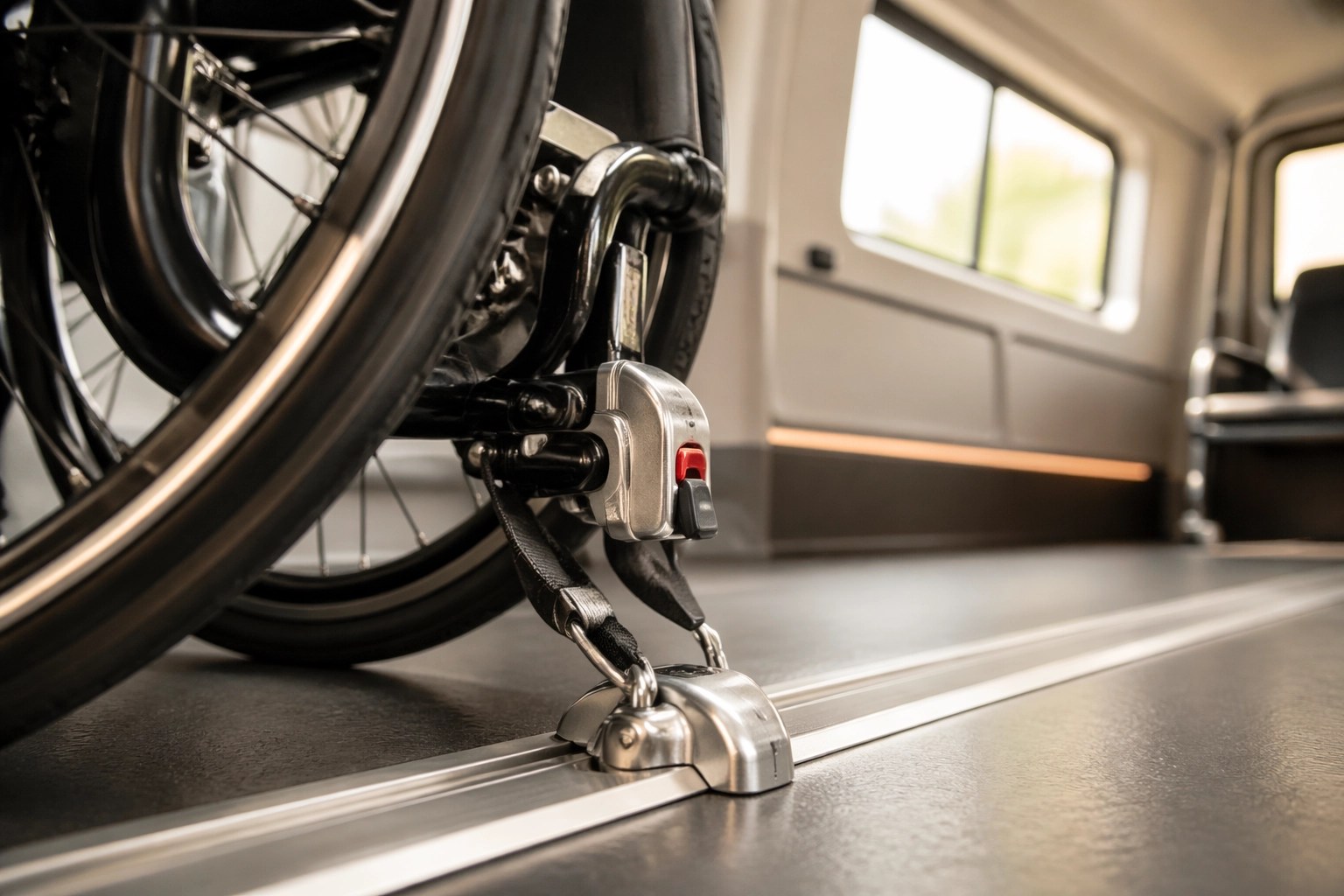
For many patients, the anxiety of being "strapped in" is real. You can alleviate this by being the second pair of eyes. Ensure the lap belt and shoulder harness are positioned across the bony parts of the body: the hips and chest: never across the soft abdomen or neck. If you want to dive deeper into why these technical details matter, check out our guide on the simple trick to improve your NEMT reliability right now.
2. Prepare the Patient: Comfort is Safety
For many patients, a 30-minute ride can feel like three hours if they aren't physically prepared. Preparation starts with clothing. Avoid bulky coats that interfere with seatbelt tension. Instead, use layers or a blanket that can be placed over the patient after they are secured.
Hygiene is the next priority. A long ride to a specialist or a dialysis center can be interrupted by the need for a bathroom break that the vehicle isn't equipped to handle. Address all personal hygiene needs immediately before the scheduled pickup.
Positioning is also key. Ensure the patient is sitting all the way back in the chair. A patient who is slouching or leaning is more likely to experience skin shear or discomfort during turns. At Swift Ryde, we emphasize that NEMT reliability isn't just about the van showing up; it’s about the patient arriving in the same physical condition they left in.
3. Scout the Terrain: Destination Recon
The ride doesn't end when the van stops; it ends when the patient is inside the exam room. For many patients, the "last 50 feet" are the hardest.
As a caregiver, you must verify the destination’s accessibility before you leave the house. Don't assume every "medical building" is actually easy to navigate.
- Is there a dedicated ADA drop-off zone?
- Are the ramps steep or gradual?
- Is the elevator large enough for a motorized wheelchair?
If you are traveling in a less urban environment, these challenges multiply. We’ve discussed how rural healthcare access matters and why securing a ride in a remote zip code requires even more planning. If the destination has a gravel parking lot or a broken sidewalk, you need to communicate that to your transport provider ahead of time so they can bring the right equipment or plan a different drop-off point.

4. Master the Logistics: Booking and Timing
Reliability starts the moment you book the ride. For many patients, the biggest stressor is the "will they show up?" factor. To eliminate this, you should never book a ride at the last minute.
When you book with Swift Ryde, we recommend providing the "appointment time" rather than the "pickup time." This allows our dispatchers to calculate traffic, weather, and the time needed for loading. Loading a wheelchair safely takes between 5 and 10 minutes: this is time that must be built into the schedule.
If you are managing a complex schedule, such as recurring treatments, you might want to look into how to book a door-to-door medical ride in 5 minutes. Speed in booking doesn't mean a lack of care; it means using a system that remembers your needs so you don't have to repeat them every time.
5. The "Go-Bag": Essentials for the Journey
A wheelchair-accessible ride is an expedition. You need a "Go-Bag" packed and ready by the door. This bag isn't just for the patient; it’s for the caregiver's peace of mind.
What goes inside?
- Medical Records: A physical copy of the day's appointment details and a list of current medications.
- Hydration and Snacks: Blood sugar drops or dehydration can turn a simple trip into a medical emergency.
- Power: If the patient uses an electric wheelchair or an oxygen concentrator, bring backup batteries or chargers.
- Comfort Items: A favorite book or a tablet with headphones. Noise-canceling headphones are a godsend for patients who find the sounds of traffic or the van’s lift overstimulating.

For many patients, having these small comforts makes the difference between a terrifying ordeal and a routine outing. It transforms the vehicle from a "transport unit" into a mobile extension of their home.
Why Preparation is the Ultimate Caregiver Hack
Being a caregiver is an exhausting role. You are a nurse, a secretary, a chef, and a logistics manager all rolled into one. By following these five steps, you aren't just helping the patient; you are protecting your own energy.
When you prepare the chair, the patient, and the destination, you remove the variables that cause mid-trip meltdowns. You ensure that the ride is a bridge to health, not a barrier.
At Swift Ryde, we see the difference preparation makes every single day. We see the relief on a caregiver's face when they realize the van is equipped, the driver is trained, and the patient is comfortable. We are committed to being the most reliable part of your healthcare journey.
If you’re ready to see how a professional, door-to-door service can change your routine, we’re here to help. Whether you are navigating the complexities of rural healthcare access or just need a one-time ride to a specialist, remember: the ride is the first step toward recovery. Let’s make it a good one.
For more tips on navigating medical transport, check out our quick-start guide to booking medical rides by the hour. Don't let a lack of transportation be the reason you miss out on the care you deserve. Prepare today, ride tomorrow, and breathe easier.